The Problems With Shared Contractor Leads (And Why No Platform Fixes Them)
We sell marketing to contractors, so keep that in mind as you read. We make money when you decide to build your own lead flow instead of buying someone else’s.
But our founder bought shared leads inside a restoration company before this agency existed, and the same problems showed up on every invoice. They aren’t the fault of any one platform. They’re wired into the shared-lead model itself, which is why switching platforms never makes them go away.
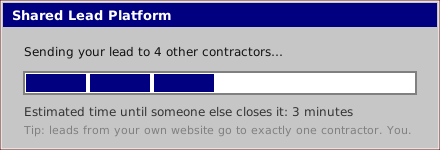
Why Does Every Shared Lead Start a Race?
A shared lead is one homeowner sold to several contractors at once. The moment the platform hits send, a race begins, and 50% of consumers hire the contractor who responds first.
Notice what you actually bought. Not a customer, not even a conversation: an entry fee to a sprint against companies who paid for the exact same phone number. Everyone in the race paid. One of you wins the job. The platform gets paid by all of you either way.
That’s not a quality problem you can screen your way out of. It’s the definition of the product.
The race also warps how your company operates. You start dropping tasks mid-job to dial a stranger, paying for answering services to shave seconds, and coaching your office to pounce on notifications. All of that effort defends a purchase. None of it builds anything that’s still there next month.
Why Does Reselling Pay Better Than Exclusivity?
Put yourself behind the platform’s desk for a minute. You spent money generating one homeowner’s request. You can sell it once at a high price, or several times at a lower price each, and the second option pays more, every time the math is run.
So the model bends toward resale, and every incentive downstream bends with it. Volume matters more than close rates, because the platform is paid on leads delivered, not jobs booked. Nobody on their side loses sleep when your callback goes to voicemail. That work (and that risk) was transferred to you at checkout.
None of this makes platform people villains. It makes them rational. The arithmetic is the villain.
The same arithmetic explains why lead prices drift up instead of down. As more contractors join a market, the platform’s inventory gets more valuable, not less: you and your competitors are bidding against each other for the same homeowner. Loyalty buys you nothing here, because scarcity is the product being priced.
Why Do Your Reviews Build Someone Else’s Rankings?
Shared-lead marketplaces run on reviews, and they push you hard to collect them, on your marketplace profile. Every review you earn there strengthens the platform’s website, which helps it rank for the searches in your trade and your city.
Read that again slowly. The homeowner searched for a contractor, found the marketplace instead of you, and the marketplace sold their request back to you and your competitors. Your own happy customers helped fund that toll booth. And if you ever leave, the reviews stay behind. They were never yours to take.
What Won’t Our Industry Say Out Loud?
Here’s the part lead sellers and marketers both prefer to skip. The platform ranks above you by pooling money from every contractor in your market, including yours. You are collectively paying to keep a middleman between you and your own customers.
And agencies pull a softer version of the same trick. Reporting in clicks and impressions hides whether any of it booked work, the same way “leads delivered” hides whether any of them answered. If a vendor can’t connect their invoice to booked jobs, the vagueness is doing a job of its own. That’s the standard to hold everyone to, us included.
When Do Shared Leads Still Make Sense?
Honestly: sometimes. A new company with an empty board, a slow season, a crew you’d rather keep busy at thin margin than idle: a capped platform budget can bridge all three. The model’s problems don’t disappear, but for a while they can be worth tolerating.
If you go that route, know exactly which product you’re buying. We’ve reviewed the platforms individually: our Angi Leads breakdown for restoration work covers the biggest shared marketplace, and our eLocal review looks at a pay-per-call option whose exclusive calls dodge the race entirely. Exclusive-lead sellers like the one in our 33 Mile Radius review fix the sharing problem too, though at prices that demand real tracking: water damage leads run around $1,000 each in a market like San Diego.
The one move that never works: treating any of them as the whole pipeline. Every problem above compounds with dependence.
What Does the Exit Actually Look Like?
Not quitting platforms cold. Replacing them gradually. Rankings you own, ads you control, and a follow-up system that answers first turn the same searches the platform intercepts into calls that come straight to you, with nobody else on the invite list.
The trade-by-trade math is already written up: plumbing leads compared source by source and water damage leads for restoration companies both price the platforms against owned channels honestly. The pattern is the same in every trade: rented demand starts fast and stays flat, owned demand starts slow and compounds. The stakes run highest where the tickets do, which is why our restoration marketing program treats shared leads as overflow, never the base load.
Want to know what the searches in your market are worth before you spend anything? Request a free lead-flow audit and we’ll map where your leads come from now, what each source really costs per booked job, and what an exit timeline looks like.